
India and Russia on Tuesday set a target of $100 billion in annual trade volume by 2030 and vowed to develop a robust bilateral payment settlement mechanism using national currencies. The two sides also inked a total of nine agreements to further broadbase cooperation in a range of areas including in the economic domain following summit talks between Prime Minister Narendra Modi and Russian President Vladimir Putin.

India has been on an FTA-signing spree of late. Since 2021, it has signed eight trade agreements, three of which -- with the UK, Oman and New Zealand -- were finalised in 2025 alone.

India and Russia are poised to sign multiple agreements to bolster cooperation in various sectors, including trade and healthcare, during Russian President Vladimir Putin's visit to New Delhi. Discussions will also address the Ukraine conflict and efforts to increase Indian exports to Russia.

Putin's State visit will centre on fixing the huge India-Russia trade imbalance, with both sides pushing to lower duties, ease non-tariff barriers, and seal a landmark mobility pact to send more Indian workers to Russia.

'...but I would not like to put a timeline to it'

India and Russia have agreed to encourage joint manufacturing of military hardware and spare parts in India, aiming to improve maintenance of Russian-origin defence equipment and boost overall bilateral defence cooperation.
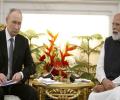
Prime Minister Narendra Modi strongly supported efforts to end the war in Ukraine and conveyed to Russian President Vladimir Putin that India will stand shoulder-to-shoulder in all peace efforts to find an amicable solution to the conflict.

India's trade deficit with Russia continued to widen for the second consecutive year to $57 billion in the financial year 2023-24 (FY24), with Moscow becoming New Delhi's largest source of crude oil imports. All eyes will now be on Prime Minister Narendra Modi's visit to Russia during July 8-9, where he is set to meet President Vladimir Putin. This will be Modi's first visit to the Kremlin since the Russia-Ukraine conflict began over two years ago.

The proposed India-Israel trade pact should be beneficial to both nations and until New Delhi gets a good deal, it would not do an agreement, Commerce and Industry Minister Piyush Goyal said. India and Israel are negotiating a free trade agreement (FTA) since May 2010. "With Israel, until we get a good deal, we will not do an FTA. It has to be reciprocally beneficial," the minister said in San Francisco on Tuesday while interacting with the Indian community.
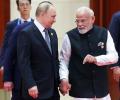
Prime Minister Narendra Modi will host Russian President Vladimir Putin for a private dinner and summit, focusing on defence, trade, and geopolitical issues, including the Ukraine conflict and the impact of US sanctions.

The Russians have termed Putin's visit to India, his first to this country since the outbreak of the Russia-Ukraine war, as 'Druzhba Dosti', which means 'friendship' in Russian and Hindi respectively.
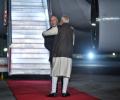
Russian President Vladimir Putin arrived in New Delhi for a two-day visit focused on strengthening ties with India, including defense cooperation and trade, amidst a changing geopolitical landscape.

'No one can or will bar India from pursuing its energy goals as it wishes.' 'The US FTA wording may sound more restrictive, but the underlying reality will not undermine India's sovereign energy decisions.'
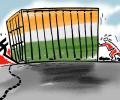
The rising dependence on discounted crude oil has resulted in India's trade deficit with Russia hitting the second-highest place last year, after China, reveals Department of Commerce data. From April through January 2022-23 (FY23), India's maximum trade deficit was with China, at $71.58 billion. This was followed by Russia, where the deficit expanded sevenfold - from $4.86 billion in April-January of 2021-22 (FY22) to $34.79 billion during the same period in FY23.
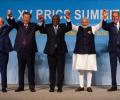
Dar also said Pakistan views Russia as an important player in the West, South and Central Asia, and strengthening mutually beneficial cooperation with Russia remains an important priority for Pakistan's foreign policy.

India has flagged concerns over non-tariff barriers (NTBs) faced by its exporters with the Russian government, commerce secretary Sunil Barthwal said on Monday. NTBs faced by Indian exporters are mainly in sectors such as marine products and pharmaceuticals.

India should simultaneously prioritise domestic exploration and production of more oil and gas in the country, and ensure we retain diversified suppliers for imports, points out former foreign secretary Ranjan Mathai.
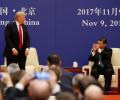
'India has an advantage because we produce more cotton and we have more workforce.'

India and Russia on Thursday decided to expand cooperation in various sectors as they signed 16 pacts, including on joint manufacture of 226 military helicopters.

Srikanth Kondapalli on what to expect from the seventh BRICS summit meeting to be held in Russia in July.
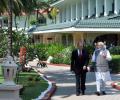
Big ticket defence deals including purchase of missile systems, frigates and joint production of helicopters were sealed on Saturday.

The two countries also asked all nations to stop cross-border movement of terrorists and asserted that a decisive collective response from the international community without 'double standards and selectivity' was required to combat the threat of terrorism.

Seeking a peaceful and secure neighbourhood amidst threat of terrorism and extremism, India and Kyrgyzstan on Sunday signed four agreements including one on bolstering defence cooperation and holding annual joint military exercises.
The US foreign and security policy establishment, says Ambassador M K Bhadrakumar, apprehends that Trump may compel them to exorcise the 'unipolar predicament', and bring foreign and security policies to reflect the desires and priorities of the American public.

With EU, it is part of the FTA that we will need to negotiate.
